Medical Alert Tattoo Guide
Why alpha-gal patients should consider a medical alert tattoo and how to get one.
Emergency preparedness context
This guide is educational support for emergency planning. It explains why AGS patients consider visible medical alerts, but it does not replace clinician advice, EMS protocols, or individualized emergency instructions.
In an emergency you may not be able to speak. EMTs and ER staff routinely check the inner wrist for medical alert bracelets and tattoos. A visible alpha-gal alert can prevent life-threatening reactions to mammal-derived medications administered before anyone reviews your chart.
Before you choose a tattoo
- Treat a tattoo as a personal preparedness choice, not a universal requirement for people with alpha-gal.
- Talk through the wording and placement with your allergist or care team if you want help deciding what is practical for your situation.
- Remember that a tattoo can improve visibility, but it cannot guarantee that every responder will read it, interpret it correctly, or know your full medication restrictions without backup information.
Quick preparedness path
- Use a visible alert when you want emergency staff to notice the risk before a full history review happens.
- Pair the tattoo with a wallet card, a phone lock screen note, and emergency contacts so the alert leads into fuller information.
- Treat the tattoo as one preparedness layer, not as a guarantee that every responder will automatically know every safe next step.
Medications that put you at risk
Standard emergency treatments contain mammalian ingredients that can trigger anaphylaxis in alpha-gal patients:
- Heparin — porcine-derived anticoagulant used in nearly every ER and surgical setting.
- Gelatin-based IV solutions — plasma expanders used in trauma resuscitation.
- Bovine surgical products — hemostatic agents, thrombin, and surgical mesh derived from cattle.
- Gelatin capsules — many emergency medications are delivered in mammalian gelatin shells.
- Pancrelipase — porcine pancreatic enzymes prescribed for digestive conditions.
- Magnesium stearate — often mammal-sourced excipient in tablets and capsules.
Our designs
We offer two free SVG designs optimized for different placements:
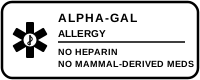
Wrist Design
Bold black ink only. 2.5 x 1 inch. Optimized for inner wrist placement where EMTs look first.
Download SVG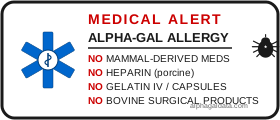
Full Design
Star of Life, lone star tick icon, and medication list. 3.5 x 1.5 inch. For upper arm, chest, or calf.
Download SVGTemporary vs. permanent
Temporary tattoos are a great starting point. They last 2-7 days depending on the method:
- Inkjet tattoo paper — print at home, apply with water. Available on Amazon for under $10.
- Custom temporary tattoo services — upload the SVG and receive professionally printed packs. See our downloads page for partner links.
- Semi-permanent ink (Inkbox) — lasts 2+ weeks using plant-based ink that sinks into the top layer of skin.
Permanent tattoos — bring the SVG file to your tattoo artist as a stencil template. The wrist design uses bold lines specifically chosen to age well in skin. Discuss placement with your artist; inner wrist is standard for medical alerts.
If you are unsure, start temporary. That lets you evaluate visibility, comfort, wording, and whether a bracelet or wallet-card-first approach fits you better before making a permanent choice.
Placement guide
| Location | Visibility | Best for | |----------|-----------|----------| | Inner wrist | Highest — first place EMTs check | Wrist design | | Upper arm (outer) | High — visible when sleeves are short | Full design | | Left chest | Medium — visible during cardiac assessment | Full design | | Calf or ankle | Lower — backup location | Either design |
Pair with other alerts
A tattoo is one layer of protection. Consider combining it with:
- A wallet card listing your full medical history and emergency contacts.
- A medical alert bracelet or tag from Road ID or similar providers.
- A phone lock screen message with your allergy and emergency contact.
- Informing your local fire/EMS station about your condition.
Bracelet vs. tattoo vs. wallet card
| Tool | Best for | Limitation | |------|----------|------------| | Bracelet | Fast visible alert without committing to permanent ink | Limited space for details | | Tattoo | Persistent visibility when jewelry is removed or missed | Still needs supporting context and chart confirmation | | Wallet card | More detailed medication/contact summary | Only works if someone can reach and read it |
Use the combination that fits your comfort level, but keep the message consistent across all of them.
What is known and what still varies
- Known: visible alerts can help emergency staff recognize that mammalian-derived medications may be a problem before a full history is available.
- Uncertain: different responders, hospitals, and emergency situations will not all notice or use the alert in the same way.
- Safer next step: if you use a tattoo, back it up with a wallet card, a phone lock screen note, and a clinician-reviewed medication history.
Tell your allergist about your tattoo so they can document it in your chart. Some EMS systems allow you to register medical conditions — check with your local 911 center.
Need the practical files next?
Where AlphaGalData’s role ends
This page can help you compare preparedness options and download files, but it should not be treated as tattoo advice, emergency protocol, or a substitute for clinician discussion about what wording belongs on your alert.
This page is educational only and not medical advice.